

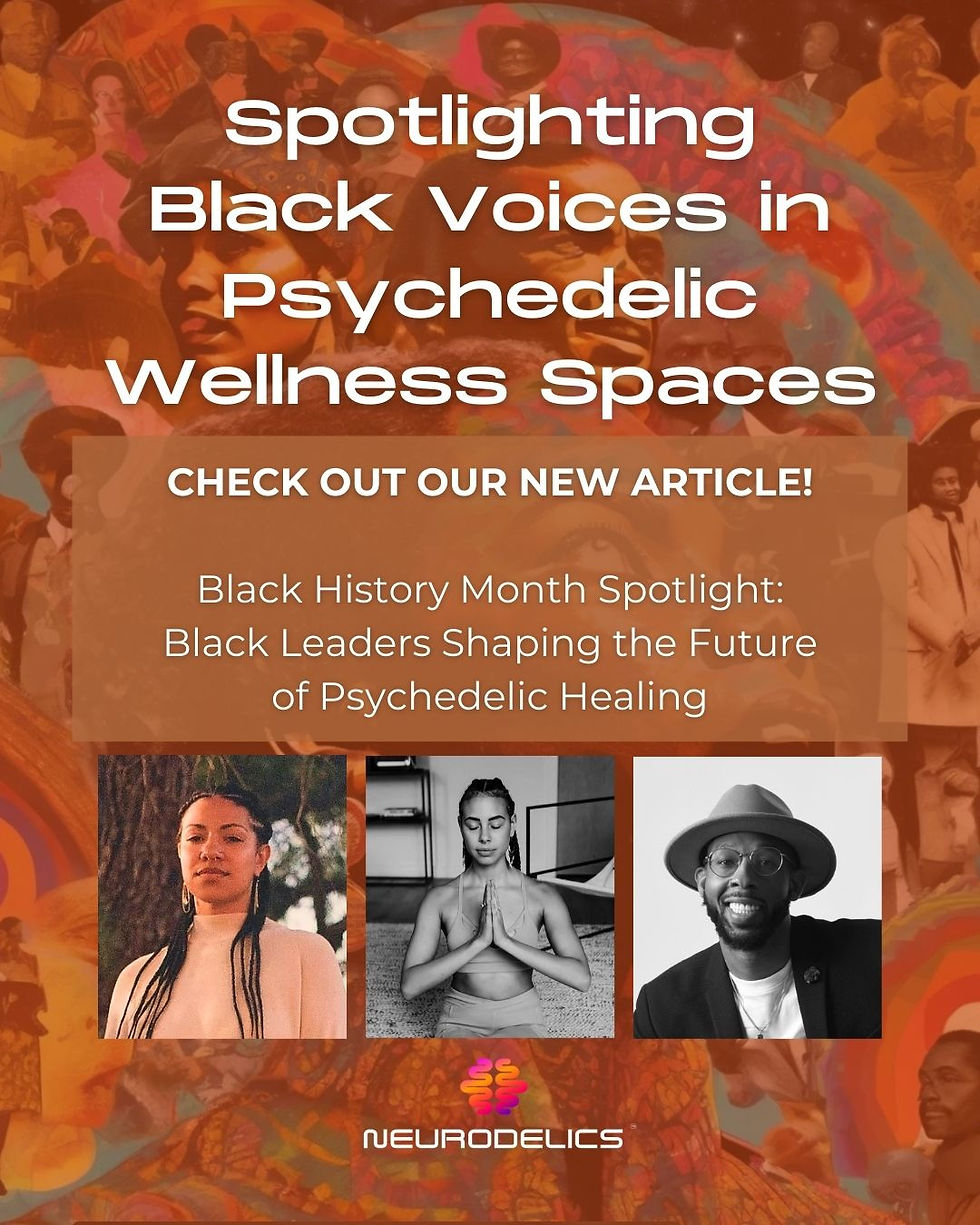
Black History Month Spotlight: Black Leaders Shaping the Future of Psychedelic Healing

Updated: Jul 21, 2025
As February—a month dedicated to celebrating Black achievements—comes to a close, the ongoing reality for Black communities in the U.S. and globally is one of disproportionate hardship—from systemic racism and economic inequity to intergenerational trauma that quietly lodges in the mind and body.
These stresses take a biopsychosocial toll. Research shows that chronic discrimination and historical oppression can fuel mental health challenges, affecting not just psychological well-being but also physical health through constant stress responses.
For many, the struggle for mental wellness is inseparable from the struggle for justice. It’s in this context that a renewed interest in psychedelic healing has emerged as part of a broader movement for Black healing and empowerment. Creating safe spaces and supporting initiatives that empower BIPOC communities lifts all members of society to support collective healing.
Key Takeaways:
Psychedelic healing is a social justice issue. Black communities, disproportionately affected by systemic racism and the War on Drugs, often face barriers to accessing mental healthcare, let alone psychedelic therapy. Advocates emphasize that those most impacted by trauma should not be last in line for healing.
Healing is both personal and collective. Psychedelics can help process intergenerational trauma, reconnect individuals with ancestral wisdom, and support community-based approaches to mental health.
Representation and cultural frameworks matter. Black-led psychedelic initiatives, BIPOC integration circles, and culturally affirming set-and-setting approaches are crucial for ensuring that psychedelic healing is inclusive, safe, and effective for Black individuals.
The Link Between Psychedelic Therapy, Mental Health, and Social Justice
Once stigmatized and criminalized, psychedelic therapies are now being hailed as breakthroughs for conditions like PTSD, depression, and addiction, yet for Black communities, access to these promising treatments remains disproportionate.
The psychedelic renaissance has so far been driven largely by well-funded companies, researchers, and enthusiasts, lacking in diversity.
“The mainstream has long viewed psychedelic medicine as the purview of people with privilege: money to burn, time to trip, and the social safety to experiment. Though psychedelics have deep roots in Black and Indigenous cultures, Western psychedelic spaces have historically excluded People of Color—but the radical healing of psilocybin, MDMA, and ketamine aren’t just for a rarefied elite. And they’re definitely not just for white people,” writes Dr. Nicholas Powers, author of Black Psychedelic Revolution.
This exclusion is not just historical—it’s ongoing, tied to the aftermath of the War on Drugs, biased policing, and the high cost of therapy. Advocates argue that equitable access to psychedelic therapies is a matter of social justice. The communities most traumatized by racism and state violence should not be last in line for healing. Contemporary movements are pushing back against this inequity.
In his book , Powers charts how psychedelics can help heal racial trauma passed down through generations and envisions these medicines as a catalyst for Black liberation.
He suggests that when combined with quality therapy, safe and equitable access, and broader societal healing, psychedelics can become “a shortcut to liberation, dignity, and power”—a “Promised Land” of healing as envisioned by Martin Luther King, Jr.
Crucially, Powers emphasizes that healing is not purely individual. In other words, personal transformation must go hand in hand with collective change. This perspective resonates with calls for Black healing sovereignty—a reclaiming of healing practices and medical autonomy by Black communities themselves.
The movement for psychedelic healing is thus being woven into larger struggles for racial equity, from decriminalization efforts that address past drug war injustices to emerging clinics and nonprofits focused on marginalized populations.
Drawing Inspiration From Black History in Cultural Frameworks for Healing
One key lesson in this emerging paradigm is that healing doesn’t happen in a vacuum. For many Black individuals, mental health is deeply interwoven with community, culture, and spirituality.
Traditional Western therapy often focuses on the individual, but Black cultural frameworks emphasize the collective—the family, the community, the ancestors.
In psychedelic experiences, some Black participants report a profound reconnection with ancestral heritage and intergenerational wisdom.
For example, activist and mycologist Reggie Harris describes feeling that psychedelic mushrooms connect him with his ancestors. “Now I have an external validation that these are opening portals, my people were using this before me, and maybe this is how we can communicate through time and space,” he says.
This ancestral connection can validate what many African and Afro-diasporic traditions have long held: that the past lives within us, and healing the present may involve reaching back to honor and address historical wounds.
Such culturally aware approaches to the psychedelic process can help create “set and setting” (a term for mindset and environment) that affirm Black identities rather than forcing participants to check their culture at the door.
Community support networks are also crucial during integration—the process of making meaning from a psychedelic journey and applying insights to daily life. Black communities have a rich history of mutual aid and collective care, from churches and social clubs to activist groups. These same community structures can provide a container for psychedelic integration.
In some cities, BIPOC integration circles and peer support groups have formed, recognizing that shared identity can be healing in itself. By discussing experiences among people who “get it,” Black psychedelic users can break the isolation that often surrounds mental health.
The goal is a more holistic, biopsychosocial approach—one that treats not just brain chemistry, but the social injustices and cultural disconnection that contribute to suffering.
Black Leaders Bridging Psychedelics and Community
A number of Black leaders are at the forefront of blending psychedelic healing with community-based, culturally informed approaches. Their work exemplifies how psychedelic ecosystems, family systems, and Black community structures can intersect to promote healing and growth.
Here are a few notable figures and their contributions:
Aubrey Howard

Championing inclusion in psychedelic therapy, Aubrey Howard, the co-founder of the Philadelphia-based psychedelic wellness collective, Philadose, and intuitive healer and integration coach, is outspoken about making healing spaces more inclusive.
Howard’s work with Philadose blended the medical model of psychedelic-assisted therapy with community elements like social clubs and virtual gatherings for education and support.
By lowering barriers (for example, by offering breathwork as a non-drug method to access altered states), she aims to democratize healing. Howard’s philosophy is that wellness isn’t a luxury reserved for the few. Her voice echoes the larger demand that Black and brown people not only participate in, but also lead, the psychedelic renaissance.
As a queer Black woman and ceremonialist, Aubrey Howard represents the powerful reclamation of healing modalities that were historically present in Indigenous and African diasporic traditions.
Her leadership in breathwork and integration is helping others heal from trauma, embrace self-love, and reconnect with the “sacred rhythms of nature” and Mother Earth’s wisdom. Aubrey also has two retreats coming up in Costa Rica and Bali. You can follow her to learn more.
Jonathan “Quest the Conduit” Brown

Jonathan Brown, otherwise known as Quest the Conduit, is a sacred facilitator and psychedelic integration coach devoted to community healing. True to his name, Quest acts as a conduit between worlds—bridging the wisdom of Indigenous traditions with contemporary integration practices.
“Grounded in cultural reverence and spiritual sovereignty, Quest creates spaces where healing and authenticity become pathways to profound self-discovery and communal connection.”
Quest stands at the intersection of technology, art, and spirituality, weaving these elements into healing work that feels relevant to modern life. Through projects like the Kindred BIPOC Integration Circle, he creates spaces of communal connection where authenticity is celebrated and Black participants can heal without code-switching or explaining their existence.
As a Black integration coach, Quest is passionate about making psychedelic healing accessible and inclusive. He leads specialized integration circles—including men’s groups and BIPOC circles—that provide safe havens for people of color to share their experiences and wisdom.
Mikaela de la Myco

Affectionately called “Mama de la Myco,” Mikaela is a researcher and community educator championing the use of psychedelics—especially microdosing with mushrooms—to support women’s health and healing. Mikaela blends academic insight (with her background in women’s studies and herbal advocacy) with traditional practices like womb care and herbal medicine.
As the founder of mushWOMB, Mikaela centers ancestral healing, sacred earth medicine, and trauma-informed care in her work. She is particularly devoted to serving mothers and marginalized genders in the psychedelic space, creating educational resources for birthing people, queer folks, and BIPOC communities.
In her role as a mother, folk herbalist, and entheogen facilitator, she is reviving the traditional use of plant medicine in motherhood, framing her mission as the “rematriation” of entheogens—reclaiming sacred medicines and knowledge that were historically nurtured by women, and ensuring that the psychedelic renaissance includes maternal and Indigenous wisdom.
Mikaela’s research shines a light on how microdosing (taking sub-perceptual doses of psychedelics) can aid in everything from hormonal balance and menstrual wellness to managing anxiety and postpartum depression.
Through a community-based study called Mothers of the Mushroom—which was recently published by James Fadiman in his book Microdosing for Health, Healing and Enhanced Performance—she helped survey 411 mothers worldwide about their use of psilocybin during pregnancy, breastfeeding, and parenting.
Mothers incorporated mushrooms at all stages of motherhood—from pre-conception to postpartum—often for mental health support and spiritual connection, and the results were enlightening.
Remarkably, over 40% had used psilocybin while pregnant and 57% while breastfeeding, with no reported adverse outcomes or fatalities in those groups. These findings challenge stigma and underscore what Mikaela advocates in her workshops and talks: When used carefully, psychedelic medicines can be powerful allies for women’s healing and empowerment.
Black Mycelial Networks: Other Black Leaders in Psychedelics, Mycology and Community Care
Reggie Harris and William Padilla-Brown stand at the crossroads of Black community empowerment, mycology (the study of mushrooms and fungi), and psychedelic healing, continuing a lineage of knowledge seeded by pioneers like Kilindi Iyi.
Kilindi, a martial artist, mycologist, and visionary, was one of the first to publicly explore the potential of high-dose psilocybin experiences in African diasporic traditions, positioning mushrooms as both ancient technology and a revolutionary tool for consciousness expansion.
His work laid the foundation for a Black mycelial culture—one that sees mushrooms not only as medicine but as a metaphor for interconnected Black resilience, underground knowledge networks, and decentralized power.
William Padilla-Brown, through MycoSymbiotics, teaches communities to cultivate their own fungi, breaking dependency on extractive economies while fostering food and medicine sovereignty.
Being a citizen mycologist, permaculture educator, and young Black entrepreneur, Padilla-Brown approaches mushrooms—including psychedelic species—not just as substances to consume, but as a model for community ecosystems, with using mycelial networks and how they thrive on symbiosis and resource-sharing as a metaphor.
Meanwhile, Reggie Harris and Oakland Hyphae uplift “legacy plant medicine workers,” ensuring that those who have carried these traditions through prohibition are not erased by commercialization.
Reggie Harris is an organizer and visionary behind Oakland Hyphae. Harris has bridged activism, culture, and fungi to broaden access to psychedelic healing, and he founded Oakland Hyphae to host groundbreaking gatherings like the Psilocybin Cup and the Oakland Psychedelic Conference, positioning the Bay Area as an epicenter of impactful psychedelic events.
Oakland Hyphae’s mission is “to educate and provide dependable, high-quality resources and information for plant medicine cultivators and enthusiasts.” Harris is also co-founder of Hyphae Labs, which leads the industry in mushroom potency testing and supports “legacy” plant medicine workers who have long practiced outside the limelight.
Together, they echo Kilindi’s vision: mycology is not just about fungi—it is a blueprint for Black liberation, a system that thrives on mutual aid, adaptation, and underground strength.
In this vision, mushrooms are more than organisms; they are ancestral teachers, economic disruptors, and spiritual allies, connecting Black communities to their roots while forging new paths for collective healing and transformation.
DEI in Psychedelics: Beyond Tokenism to True Inclusion
The psychedelic space is hailed as a frontier for healing and transformation, but for many BIPOC and marginalized individuals, it mirrors the same systemic issues seen in mainstream industries. Quest the Conduit put it plainly for us:
“The lack of diversity I experienced in tech is the same in the psychedelic space—we’re often just numbers on a DEI checklist that no longer exists. I’ve been involved with psychedelic companies that preach diversity but don’t practice it, creating harm not just for BIPOC but for women as well.”
This sentiment reflects a deeper reality: diversity without structural change is just optics. Many psychedelic companies use inclusive language in their branding, but their leadership remains homogenous, their hiring practices favor the privileged, and their work culture replicates the very hierarchies they claim to dismantle. BIPOC and women are often present, but not empowered.
And when marginalized communities take matters into their own hands—creating spaces for culturally competent healing, community-led psychedelic services, and research focused on underrepresented groups—they face another barrier: funding.
The psychedelic renaissance is backed by millions of dollars from biotech firms, venture capitalists, and nonprofit grants, yet access to these resources remains disproportionately out of reach for Black, Indigenous, women, and queer-led initiatives.
“It’s an eye-opener and a reminder of why we must build our own spaces. But then you run into the issue of securing funding. When will it change?” Quest said.
True equity in psychedelics isn’t about checking a diversity box—it’s about transforming who holds the mic, who makes the decisions, and who gets to actually have access to these treatments.
Beyond Black History Month: Community Healing in Full Color
As we honor Black History Month, we acknowledge that the fight for equality includes the fight for mental wellness and the right to heal. The historical struggles of Black people have always had a psychological dimension. Oppression wounds the mind and spirit, and liberation must soothe and uplift them.
Today’s burgeoning intersection of Black liberation work with psychedelic healing is a testament to the community’s resilience and creativity. It speaks to an understanding that true wellness requires social justice and that the profound personal insights psychedelics offer can be a tool for collective emancipation when placed in the right hands.
By integrating psychedelic medicine with community care and demanding inclusion at every level, we move closer to a future where mental health care is not a privilege, but a communal resource.
As we honor these leaders during Black History Month and always, Neurodelics reaffirms its mission to support the very principles they exemplify: community healing and care, cultural integration, and the unification of ancestral wisdom with modern science.
At Neurodelics, we believe true psychedelic healing happens when diverse voices are heard and traditional practices are respected. We are committed to a future where psychedelic healing is equitable, culturally enriched, and accessible to all. Together, we are supporting a new paradigm of healing.
Additional Reading:
Personalized, Digital Health Tools & Neurodiversity-Informed Psychedelic Education for You
Thank you for exploring this topic with us! We hope the insights resonate with your goals for personal growth, healing, or professional development. To dive deeper into neuroplasticity, psychedelic therapy, and how neurodiversity intersects with these fields, visit our blog for cutting-edge articles, our practical tools for personalized support, and stay up to date on our latest releases! We are releasing our Beta version of our Psychedelic Neuroplasticity Digital Health Tool soon and are looking to collaborate with others for research.
If you’re ready to take the next step on your journey, we invite you to explore our Neurodelics platform. Whether you’re seeking personalized tools for mental health support, neurodiverse communities, or psychedelic education, we are here to support you. Neurodelics is dedicated to providing you with neurodiversity-informed and research-backed tools for psychedelic integration and support.
Explore Neurodelics Today
Subscribe to Our Newsletter to stay in the loop and receive your guide on self-directed neuroplasticity.
Learn About Our Platform and discover upcoming courses, community spaces, and more.
Follow Us on Instagram, LinkedIn, Facebook, TikTok, and YouTube for the latest updates and content.


Comments